Monday, 21 November 2016

Final Feedback Results

I created a final feedback form a week before the deadline for my final class feedback (viewable here: https://docs.google.com/a/northbrookcollege.ac.uk/forms/d/1DcY4rlclqJOHpoWgvu_u2U3B0ivx9NB_tfPCdGfo-CU/edit#response=ACYDBNir1QHrAinTjF8Ga7D8VyhFPNnRAnvMFcORvPDAwoU0mu8KPU3iSVNAiA), getting everyone in the lesson to play my level and write down their answers to my questions. This is critically useful information for me to receive, as it'll allow me to make any last balance changes before I finish texturing and package my level. Here are the online results I received:


On top of this survey I got one of my friends Matt to test my level (who was on my game design course at college level) for 15 minutes to see what they thought, as someone with plenty of experience in games but never having played any Unreal Tournament before. Having a twisted perspective from someone familiar with shooters, just not this game in particular is nice to have. This is what he said: "I really enjoyed the constant chaos of the map. I am familiar with shooters but not unreal tournament so I enjoyed learning how different weapons and power ups worked. I think it would be good if there were more spawns other than the main tower as when you spawn it's easy to lose damage straight away and you only start with a pistol meaning there is an unfair advantage. I enjoyed the variety of environments with the towers and how they had different layouts and how they corresponded with the theme of the tower. I liked the check pattern of the towers as it is an interesting stylistic choice. Aesthetically I liked the earth towers interior as I liked the contrast of luminous mushrooms against the darkness of the towers cave like interior, I didn't spend much time in there as I didn't always find many enemies inside. I like the few secret areas I found especially the one which you get to via the main tower as the weapon is a one use only so you can't really abuse it (if you chose to you would have to wait a long time for the cool down of the weapon respawn)." -Matt Hale


These answers have given me incredible knowledge on the options and perspectives of the multiple people who played my game. Overall the response was so much better than the last group feedback I did, without any major bugs or issues being frequently brought up (besides the easily amendable one I mentioned below), and with absolutely no way to get out-of-bounds or into any unintended areas (which is helped by the fact that getting potentially out of bounds will lead to a player falling to their death. Following this feedback I made a huge amount of changes to streamline the experience and fix any bugs and errors. Here are a few of my efforts below:

Firstly a big issue I had was leaving one of the player spawns in the now closed-off upper section of the tower. Because I had sealed it away due to it being an unneeded part of the stage, I had made the rookie error of leaving a spawn location there by mistake. I'm glad this was discovered whilst testing the actual game, as usually when I test in editor I use the 'play from here' function, often abandoning the pre-set player spawns I've made. Speaking of spawns, because the majority of people spawn in and around the main tower, it made the middle section incredibly chaotic with a huge emphasis on spawn-killing, which is a very frustrating element in a fast-paced deathmatch game. To amend this I proceeded to place 4 spawn locations in every tower to spread everyone out and make the map more populated, but not deserted, making a total of 25 spawn points, giving the map more variety and randomness in spawning whilst discouraging spawn-killing (as it's less likely someone will appear at any one place). Plus my feedback indicated a huge range of responses regarding to the finding of enemy players, and this links directly to how much time they spent playing in either the main tower or smaller outside ones. I did this spawn rearrangement for every tower except fire, since because it's incredibly dangerous as an area to navigate that causes damage over time, while also including some very strong and exclusive weapons/power-ups, this location I feel is best reserved as a prime high-risk high-reward location for players to venture to themselves.

I got a few recommendations, both by Matt and people like Tom in my feedback, to keep the coloured checker grid patterns on the towers, as it fits to a very nice aesthetic choice. So I changed the Earth Tower from a previous rock texture I'd used back to yellow, but decorated with rocks instead for it to still embrace the theme alongside the other towers. This way they all keep their kiddy and colour-coordinated themes, whilst also having different pieces of decor on them to represent that specific element. Here's a tower comparison:

Before

After

One other issue Ben M found via testing was in the secret area containing the Redeemer. He found because it was a relatively safe space including the game's strongest gun and health pick-up, it provided a very 'campy' and safe playstyle where players could stay there for the whole game. To combat this I added a firey particle effect covering the whole platform where you slowly take 10 points of damage a second. This encourages the player to take the weapon and leave quickly, and since it also has to recharge fully each time the player spawns, they have to have been alive for a while before they're able even to collect it when they go, adding a nice layer of balance.

Before

After


Lastly I fixed numerous other quality of life issues to make the game level more enjoyable to play, from fixing bounce pads (such as one in the Lava Tower) so that it's impossible to kill yourself while flying. I also ensured that the bird particle effects don't clip through walls by lowering/raising them respectively, as it was rather jarring to behold. Another thing I did was fix the stairs in the central area so that they booth lead directly up to a higher vantage point, while making the area much more fun and easier to navigate by being more inter-connected, giving my level a much better flow channel. A final and smaller detail picked up on was the entrance to the Earth Tower, since the positioning of the shadowy dropped ledge made a few players think they'd fall to their death. To remedy this I placed a few of the glowing mushrooms from inside the cave outside both on the path and wall at eye-level to the player when they're approaching the entrance, allowing them to instinctively know they should jump off the ledge. He's a screenshot showing what I mean:


Now I feel that my level has reached a complete stage, I can finally write-up my critical analysis in my presentation. I feel that my level has developed a ton since it's original conception, considering on the first play-test it was a chaotic mess that would have been hilarious to play as an adventure game, but not as a deathmatch stage due to the sheer chaos, I feel my stage has improved a ton and is now much more streamlined and balanced, whilst also including all the silly quirky gimmicks I set out to create. Here's a final image depicting my finished level after all this progress and feedback, and personally I'm very proud of what I've managed to accomplish:


Tuesday, 15 November 2016

Improving my Level Based on Feedback

After the group playtest, these last few weeks I've been working on my level to give it a much more 'deathmatch level' feel. As the main criticism wasn't that the level itself was inherantly bad, but instead it was just more geared towards an adventurous puzzle game than a fast-paced twitchy shooter. A big word of advice I later received from Tom and Isaac was that my level should be scaled down and condensed in size, and all of the towers should connect together more so the player can be continuously running and moving somewhere.

There are various other balance changes I also worked on implementing, and a big feature needed in my level was choice and options. Before, the path spreading from the central tower into the four other smaller towers was incredibly linear, and once in the towers people only had one more way to exit (meaning the choke points were too severe). So players desperately needed choice, so to amend this I wanted to make it possible so that wherever a player is on the map at any given moment, it's possible for them to go in a minimum of 2-3 directions, depending on the circumstance. So for example, while the basement of the tower only had the staircase and bouncepad as ways of entering and leaving, now it has two spiral staircases, a bouncepad, and three doorways leading to other parts of the map, giving them a lot more freedom of choice.

I also made the level's overall size and scale over four times smaller compared to what it was previously, while using the recommended Unreal Tournament unit sizes (for example, I resized my outside pathways to be 500 units wide for the player's most optimal experience). This means there it has a lot faster and snappier gameplay, and when combined with the previously included options for the player it's overall a lot more fast-paced experience, matching the style of other popular 'twitchy' shooters such as the Counter Strike games. Because of this enhanced size I was able to removed the unneeded areas of the level, so I removed the entirety of the map's upper section, as it was unneeded space that only really increased travel time, without adding much. Modifier the tower's lower section to serve as the level's main central area works much more, and the inclusion of 8 different doors there means players always have somewhere to go.

Connecting all of the towers together helps give the map a much better flow channel, and the new and more generous item placement helps give the different situated weapons and items more endogenous value. These various game design techniques I was able to implement mean that my level has a much more professional design to it, shifting the focus away from a manic and confused experience to a more streamlined and focused deathmatch stage ready for the next and final group playtest on the 15th of November. It's organised chaos, keeping the spirit of the idea from what I originally envisioned while still meeting the requirements of the assignment brief.

I performed some more research into level design techniques, and encountered an incredible video by (Extra Credits, 2016) which discusses asymmetrical game design for online shooters, specifically more into the game Overwatch, with the video covering various topics. Catering for every character and ability equally is said to be a key element here, as it allows the players to have more variety in the playstyle that they choose, while still having a level of balanced gameplay, or else a map will become very chaotic and stale to play, since the majority of players will gravitate towards the strongest and best gameplay styles, creating a crazy gameplay experience for everyone involved. These are all things I'll be including into my own deathmatch stage, matching the mechanics of Unreal Tournament. Such as having various strategic locations for long-ranged weapons to snipe from, adding a variety of places to explore, with some only accessible to higher-skilled players (like wall-running or jumping with the Impact Blaster).

Likewise asymmetry plays an important role in map design, tying into the collectables and exploration element. Having a map that's completely mirrored is fine for some game modes like team deathmatch, but in a free-for-all setting as set in our assignment brief variety is a much more important factor to include, largely due to the fact the maps can just be much more interesting and less predictable to explore, without worrying as much if players will get tired of your level before the first match even begins.


After making all of these changes and refinements, a day before our final playtest I got Tom and Isaac to play through it once more and give their opinions, so I'll have a much more solid idea of what to change before our final testing period. Their replies are shown below:


"- Weapons on the bridge defeats the purpose of exploring the towers to scour weapons. Why do I need to go out of the way to explore the towers to find weapons when they're conveniently placed on the bridge?
- Making the stage far more compact allows me to travel through the map quicker and easier! It also lets players pack together easier too.
- Some towers have been simplified a lot, such as the Air and Earth towers. It makes them easier to explore.
- I find the middle towers features difficult to use or not necessary. The staircase slows down gameplay a lot and detaches the player from the bridges and towers, and the floating walls are hard to land on and the rewards on them aren't worth it." -Tom

"The jumpads are sometimes too slow. Maybe adding teleporters in the towers so that the player can go from tower to tower will quicker and it means the player doesn't need to travel across the center if they don't want to/need to." -Isaac


This feedback is very useful to take on-board on top of everything else, and I took all of their comments to heart while producing this next-stage screenshot (shown below).


Wednesday, 26 October 2016

First BSP Playthrough

This week initiated the very first playtest for our deathmatch levels, as I spent the previous week developing my stage. My initial BSP level has slightly changed since my initial concept.As I started production, Tom suggested (in the quote listed below) I changed the basic maze, stairs, etc themes of my towers to match the various elements commonly seen in fictional media. As not only would this help add much more variety to the level, it means the towers can be also colour-coordinated so they can be easily recognised at a glance by a player during fast-paced deathmatch gameplay.

"I feel the idea of elemental towers offers a lot more variety than them being focused on a simple concept like stairs." -Tom


Here is a screenshot of my BSP level:


After its initial creation the playtesting in class began, where we rotated around the computers to test and give feedback to each other's deathmatch stages. The game design book, Game Development, Art and Design, is one I borrowed from the library, which also covers areas of testing, stating: "[testers] are crucially important to the development effort: they provide valuable feedback and and ensure the game's functionality isn't compromised by bugs and glitches." (McCarthy, Curran and Byron, 2005) This essentially means that testing is absolutely essentially to the creation of any game level, since it's a method of getting a larger variety of people to play the game outside of the development team with a less bias viewpoint. Plus, having different people who think and act in a multitude of ways is a great method of having players find bugs in ways others may not have even thought of.

The results of of testing via a Google Forms survey, available at https://docs.google.com/a/northbrookcollege.ac.uk/forms/d/1fPvQM8gCThYZtq-Pk5ghGYGg1LshkdDD9Elox8xXcRg/edit#responses, by 12 of my peers from uni will be displayed below:


The feedback I received was very mixed, some people lived the level, others were indifferent and others didn't like it much, boiling down my level's structure to personal taste. The trends were all over the place. This stems from the fact that it has very fast-paced gameplay with the placement of the boost pads, and also the towers while creative, slow down the pace of the shooting, merging the level to be more exploration focused thank for a deathmatch game. While the theme and concept of the stage with all its variety was generally well liked, it was the execution which was off. This type of level being more focused on exploration doesn't meet the assignment brief, so amendments will have to be made.

The level fortunately didn't have any major bugs or glitches, with the majority of the issues coming from the design choices mainly. There are a few notable ones for me to take action on however, such as how every 30 seconds or so the item droppers spawn another dropper unintentionally, meaning as time goes on more and more begin to flood the level, causing manic high-speed chaos. Likewise the stairs in the middle section have an issue as found by Rob, where for some reason every now and again they stop their player in their tracks from progressing, disrupting the flow of the game. I will have to look into this issue further as I never found it during the development phase, with me perhaps having to make each individual stair step slightly lower to accommodate for the player character.

To follow on from this advice, I feel adding a separate bottom layer of platforms connecting to the towers, and making the whole stage more condensed to funnel the players together more, will go a very long way towards my level having a fun and fast flow to it, without relying on the many speedboost bubbles spread around the area. Likewise I will be reducing the content inside the four towers massively to attain that faster gameplay, whilst still truly keeping their elemental representation. In the next post I will be going through the changes I'll be making to the level, as well as any extra research to support this development.

Sunday, 16 October 2016

Environment Design Initial Building Stages

This week I finished a higher-quality draft of my map, this is what I came up with for my second map draft design (shown below). But I decided to perform some more research into the structure of a shooter map to see what other elements I can incorporate into it whilst building.


I decided to place the four trials inside the towers rather than outside, in order to make the map more spacious and less cluttered. Likewise, everything is much more condensed and organised, making the terrain much easier to navigate. Because the map is rather symmetrical in shape, the four different smaller towers containing the four trials on the outskirts of the map will be colour-coordinated so give players a sense of direction. To balance this, rare weapons will be placed inside these five various towers around the map, but the item pickups will be outside, thus encouraging the player to leave in order to collect more resources.

I also decided, because my level will be floating in the sky, I'll have surrounding mountains in the background with a huge ocean below the level (killing any players who fall into it). So using this draft design as a brief guide, I began blocking-out my level in Unreal 4 to get the general gist of the size and scale would look like, and to also run a first playtest to see what changes need to be made to the actual structure of the map following some peer feedback. I used the mountain background assets from the official UE4 Sun Temple content pack, and the water from the official flowing water pack. This will help create the sense that these towers are floating above a living, breathing world.

(the_hub_gaming, 2016)

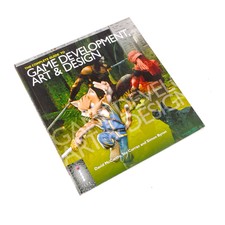
First I rented the book Game Development, Art and Design (shown above) by (McCarthy, Curran and Byron, 2005) from the university library, since it covers various level design techniques that can be implemented into 3d games, and specifically shooters like my deathmatch level. It states that your game needs to have a structured, yet natural flow to it, allowing the player to get immersed into the gameplay as they're fooled to believe it's a real, breathing world. This is no different to shooters, with the book quoting: "The nature of shooter games- to run around and shoot just about everything- makes getting a functional level working pretty easy, but just because it works doesn't mean it's any good." (McCarthy, Curran and Byron, 2005). This quote sums up creating a deathmatch level very nicely, we are all in the class going to make something of some description, but the actual quality will be reflected on how much time and research we spent expanding our skills and knowledge to improve.

I conducted some research into various tools which would make this process easier, and according to the official unreal documentation by (Unreal Engine, 2015), the BSP brushes and pen tool works very well for this job of drawing simple geometry. Because BSP in UE4 is so quick and easy to edit and modify, it means I can make quick and simple changes on the fly within the engine, without starting with finished models that are much more harder to work with (due to not being as flexible as BSP when it comes to creating shapes.) Plus the official documentation lists a lot more ways to use BSP than just adding and placing shapes, such as going into geometry mode to get a greater level of control over the detail of your BSP, reshaping them into more precise representations of what you want the level to look like.

Friday, 30 September 2016

Unreal 4 Level Planning and More Research

This week I continued my research to further plan for the development of my level. In this lesson I drafted out a capture the flag map and attempted to recreate it in Unreal 4. We watched a Youtube video series by (WorldOfLevelDesign, 2016) which explained the three ways to plan out a map in a shooter game on paper as you draft out the design before physically transferring it into a 3d space. I will explain these three methods now:

First is Pathway Flow First, where you have a a rough idea about your map and its layout and later on create the boundaries and restrictions. It's simple and efficient for those who already have solid foundations to work towards. The next method is for people who have multiple ideas, where you draft out different sections of a level individually, or even completely separate levels all together, and then try to find a way to fit them all together again into one coherent level, almost like a jigsaw puzzle. Lastly is the third and arguably least useful method where you draw the entire layout of the map and then a simple layout showing only the possible paths that are used to navigate around. This isn't very popular simply due to you already needing to know the intricate details of the map, and at that point you've probably already drafted it out in full anyway!

I tried to follow the first step for my beginning level, where me and Tom drafted up a capture the flag map. The idea behind it was the map is symmetrical and mirrored both sides, however it was with a twist utilising a 'Fire and Ice' aesthetic. This is where one side is a snowy winter wonderland, and the other mirrored a fiery lava-filed wasteland, with both of these sides being identical to each other in layout. The centre area mixes both themes to create a very beautiful yet surreal area with a mixture of hazards. Here's an image of both the draft and final map designs with a lined layout me and Tom created:


Multiple paths with different hazards on each is also something we considered to add, so there's not one straight route there and back. This also creates a very strong risk versus reward system, where one path is very short but with a blizzard/firestorm decreasing player visibility, whereas another can regularly have giant snowballs/boulder that roll down them. One final gameplay element we considered was a half-covered in snow volcano slapped right in the centre of the map. Where once one player captures the other team's flag, said volcano erupts and shoots lava to determent the winning team. I helps balance out the game in a fun and chaotic way, making this map a lot more fast pace and hectic than more standard maps.

This fast and frenetic fun is another element I want to include in my final deathmatch level, and I've decided that my level will play almost like a platformer cross shooter in the sky. With lots of open areas and levels to run around without much cover to hide behind, enforcing a 'campier' playstyle much less. This forces players to keep moving and jumping onto platforms while also shooting each other at the same time, giving the level a very high skill ceiling to be mastered. This is a very unique idea for a level in Unreal Tournament, and from the stages we played in the game like Chill and Underland there really isn't already anything like this.

Because I have a more firm grasp on what I want my level to be like now, I can initiate the planning stages!

I began by drafting out the rough plan of my level on paper, with it aiming to include a concept where the level is floating in the sky with various elevated platforms and ledges. However I expanded upon this by including four 'trials' at each quarter segment of the map. From an area with massive rolling balls to push and hide behind, to another with acts more like a platforming section, there's a lot of variety spread throughout the level. It's also designed to have a higher level of skill to succeed, due to some of the passageways being quite narrow to run across, meaning players have to keep on their toes to not fall off and die. Here's an image of the draft plan I created:


After creating my first draft I asked for some peer feedback to see if I could fit in any improvements. Here are the results:

Ben: "While the map on its own looks quite fun and balanced, the four trials look a bit too full-on for a fast paced shooter. The focus feels shifted away from actually killing somewhat. The trials could still be there, but in a more condensed form."

Isaac: "I do really like the stage layout, it feels a bit too cluttered. The map is enormous in scale and with all the trials taking up most of the space it feels like it would be tough to even find enemy players, let alone kill them too!"

This is very useful critical advice to have, so to follow on from this I decided to make a second revision draft copy where I redrew the map from scratch, while including some of the suggestions (like more space to run around and shoot people with less focus on the trials.) I made this in the following week.

Wednesday, 21 September 2016

Characteristics of a Deathmatch Level

A variety of shooter games from Call of Duty, to Plants vs Zombies: Garden Warfare have 'Deathmatch' as a playable gamemode. This can be played either in a free-for-all style or between teams, but the objective is always the same: kill as many other players as possible within the allotted time limit. The maps should play a huge part in this gamemode, ideally be designed from the ground-up with the fundamentals of the gamemode in mind, as they can be designed around the objectives of the game and balanced around that fact that players need open places to run to, narrower areas to sneak around, and also elevated positions to give more long-ranged characters an advantage.

As talked about by (Dodger, 2008), the maps for team-based games should ideally be focused to accommodate for more players. Whereas maps in a singleplayer game can be more streamlined and linear in focus so the game can focus on the narrative and story, maps for a game with multiple people playing at once need to be much more open and less cramped, so people aren't stuck bundled together where players get killed too quickly. Likewise, a symmetrical map is also a possible option. As shown in the image bellow from the team-based shooter Splatoon, every map is mirrored with players starting on each side, in order to make the ink-based gameplay as balanced and fair as possible. It means both teams have the same chance of victory, and it falls more down to player skill to determine who the winner is. This gameplay balance extends to other games too, and with a quote by games journalist Dan Tyler which summarises this nicely:

"The main caveat while designing fun navigability is that it should not come at the expense of your other gameplay elements.  Imagine the intense combat of Modern Warfare 2 in the crazy parkour levels of Mirror’s Edge...  the navigational and martial elements of the level would be completely at odds with each other. There’s a good reason why DICE kept the combat in Mirror’s Edge nice and light." (Taylor, 2013)

A map from Splatoon, which is completely identical on both sides so both teams have a fair fight (McMinn, 2015)

The Deathmatch style of gameplay can also extend to more game genres depending on the situation, such as MMOs and even racing games. For example, the Mario Kart series has an optional mode called 'Balloon Battle', where players compete either in teams or individually to drive around a specially designed map to knock out the other players and be the last one standing. The maps in the game are separate from the race tracks and specifically designed for this mode, since racing round actual tracks and battling on them are two different things. It's an example that maps need to be designed with a specific purpose, and there's no 'one size fits all' option where one map can work with every conceivable gamemode. This was the case until the latest game, Mario Kart 8, changed things up and removed the battle mode exclusive stages, where instead players fight it out on the racetracks instead. This is a great example of why stages should be designed for different modes, since battling out on tracks is an incredibly long and gruelling experience. Since you just drive around them hoping to find someone, and they're so long and open as more players get eliminated it gets harder to even fight people.

The battle mode in the latest game set on the race tracks, it makes the whole experience incredibly long and gruelling compared to the dedicated battle arenas of past games (Meguroko Sylveon, 2014)
Our whole class had a gameplay session with the game 'Unreal Tournament' today, a game which has a deathmatch mode, with our assignment tasking us to create a level for that game. The maps in this game are very well designed and fun to traverse, with various platforms, vantage points, corridors, powerups and even traps to mix things up. This has given me a lot of inspiration for what sort of stage I want to create for my own Unreal Tournament level, plus it really helped me get to grips with the base gameplay mechanics, allowing me to have a good understanding of them without making me create a level for a game I don't even understand, that would be very detrimental. Right now I plan to create a map with various levels and platforms, giving it a big sense of altitude as players traverse up and down a tower-like area. In order to balance this out, the long-ranged weapons like the sniper rifle will be strategically placed at the lower sections of the tower, forcing players to make their way up to the top to use it more effectively. This will help make the level feel more balanced, and will add a much deeper layer of risk verses reward for the more experienced of players.

Tuesday, 20 September 2016

Bibliography

Dodger. (2008). Designing FPS Multiplayer Maps – Part 1. [online] "On Game Design". Available at: http://www.ongamedesign.net/designing-fps-multiplayer-maps-part-1/ [Accessed 20 Sep. 2016].

McMinn, K. (2015). Unreleased Splatoon Weapons, Maps, Modes Leaked | Nintendo News. [online] Nintendo News. Available at: http://nintendonews.com/news/wii-u/unreleased-splatoon-weapons-maps-modes-leaked/ [Accessed 20 Sep. 2016].

Meguroko Sylveon. (2014). Mario Kart 8 Online Multiplayer Battle Mode gameplay. [online] YouTube. Available at: https://www.youtube.com/watch?v=Y7lbol1hdso [Accessed 21 Sep. 2016].

Taylor, D. (2013). Ten Principles of Good Level Design (Part 1). [online] Gamasutra. Available at: http://www.gamasutra.com/blogs/DanTaylor/20130929/196791/Ten_Principles_of_Good_Level_Design_Part_1.php [Accessed 21 Sep. 2016].

WorldOfLevelDesign. (2016). CS:GO 3 Workflow Techniques - How to Draw Top-Down Level Design Map Layouts [Tutorial #16]. [online] YouTube. Available at: https://www.youtube.com/watch?v=y5zZ2hj5tJ4 [Accessed 28 Sep. 2016].

Unreal Engine. (2015). Basic Level Design BSP (Unreal Tournament). [online] Available at: https://wiki.unrealengine.com/Basic_Level_Design_BSP_(Unreal_Tournament) [Accessed 14 Oct. 2016].

McCarthy, D., Curran, S. and Byron, S. (2005). The complete guide to game development, art, and design. Lewes: Ilex.

the_hub_gaming. (2016). The Complete Guide To Game Development, Art & Design. 2005. Ilex Press.. [online] Ebay. Available at: http://www.ebay.co.uk/itm/The-Complete-Guide-To-Game-Development-Art-Design-2005-Ilex-Press-/331817561959?hash=item4d41de2f67 [Accessed 25 Oct. 2016].

Extra Credits. (2016). Overwatch and Asymmetric Level Design - What Makes the Maps Fun?. [online] YouTube. Available at: https://www.youtube.com/watch?v=4DynhzEQtog [Accessed 20 Nov. 2016].