Wednesday, 26 October 2016

First BSP Playthrough

This week initiated the very first playtest for our deathmatch levels, as I spent the previous week developing my stage. My initial BSP level has slightly changed since my initial concept.As I started production, Tom suggested (in the quote listed below) I changed the basic maze, stairs, etc themes of my towers to match the various elements commonly seen in fictional media. As not only would this help add much more variety to the level, it means the towers can be also colour-coordinated so they can be easily recognised at a glance by a player during fast-paced deathmatch gameplay.

"I feel the idea of elemental towers offers a lot more variety than them being focused on a simple concept like stairs." -Tom


Here is a screenshot of my BSP level:


After its initial creation the playtesting in class began, where we rotated around the computers to test and give feedback to each other's deathmatch stages. The game design book, Game Development, Art and Design, is one I borrowed from the library, which also covers areas of testing, stating: "[testers] are crucially important to the development effort: they provide valuable feedback and and ensure the game's functionality isn't compromised by bugs and glitches." (McCarthy, Curran and Byron, 2005) This essentially means that testing is absolutely essentially to the creation of any game level, since it's a method of getting a larger variety of people to play the game outside of the development team with a less bias viewpoint. Plus, having different people who think and act in a multitude of ways is a great method of having players find bugs in ways others may not have even thought of.

The results of of testing via a Google Forms survey, available at https://docs.google.com/a/northbrookcollege.ac.uk/forms/d/1fPvQM8gCThYZtq-Pk5ghGYGg1LshkdDD9Elox8xXcRg/edit#responses, by 12 of my peers from uni will be displayed below:


The feedback I received was very mixed, some people lived the level, others were indifferent and others didn't like it much, boiling down my level's structure to personal taste. The trends were all over the place. This stems from the fact that it has very fast-paced gameplay with the placement of the boost pads, and also the towers while creative, slow down the pace of the shooting, merging the level to be more exploration focused thank for a deathmatch game. While the theme and concept of the stage with all its variety was generally well liked, it was the execution which was off. This type of level being more focused on exploration doesn't meet the assignment brief, so amendments will have to be made.

The level fortunately didn't have any major bugs or glitches, with the majority of the issues coming from the design choices mainly. There are a few notable ones for me to take action on however, such as how every 30 seconds or so the item droppers spawn another dropper unintentionally, meaning as time goes on more and more begin to flood the level, causing manic high-speed chaos. Likewise the stairs in the middle section have an issue as found by Rob, where for some reason every now and again they stop their player in their tracks from progressing, disrupting the flow of the game. I will have to look into this issue further as I never found it during the development phase, with me perhaps having to make each individual stair step slightly lower to accommodate for the player character.

To follow on from this advice, I feel adding a separate bottom layer of platforms connecting to the towers, and making the whole stage more condensed to funnel the players together more, will go a very long way towards my level having a fun and fast flow to it, without relying on the many speedboost bubbles spread around the area. Likewise I will be reducing the content inside the four towers massively to attain that faster gameplay, whilst still truly keeping their elemental representation. In the next post I will be going through the changes I'll be making to the level, as well as any extra research to support this development.

Sunday, 16 October 2016

Environment Design Initial Building Stages

This week I finished a higher-quality draft of my map, this is what I came up with for my second map draft design (shown below). But I decided to perform some more research into the structure of a shooter map to see what other elements I can incorporate into it whilst building.


I decided to place the four trials inside the towers rather than outside, in order to make the map more spacious and less cluttered. Likewise, everything is much more condensed and organised, making the terrain much easier to navigate. Because the map is rather symmetrical in shape, the four different smaller towers containing the four trials on the outskirts of the map will be colour-coordinated so give players a sense of direction. To balance this, rare weapons will be placed inside these five various towers around the map, but the item pickups will be outside, thus encouraging the player to leave in order to collect more resources.

I also decided, because my level will be floating in the sky, I'll have surrounding mountains in the background with a huge ocean below the level (killing any players who fall into it). So using this draft design as a brief guide, I began blocking-out my level in Unreal 4 to get the general gist of the size and scale would look like, and to also run a first playtest to see what changes need to be made to the actual structure of the map following some peer feedback. I used the mountain background assets from the official UE4 Sun Temple content pack, and the water from the official flowing water pack. This will help create the sense that these towers are floating above a living, breathing world.

(the_hub_gaming, 2016)

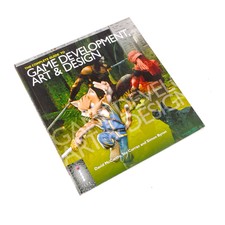
First I rented the book Game Development, Art and Design (shown above) by (McCarthy, Curran and Byron, 2005) from the university library, since it covers various level design techniques that can be implemented into 3d games, and specifically shooters like my deathmatch level. It states that your game needs to have a structured, yet natural flow to it, allowing the player to get immersed into the gameplay as they're fooled to believe it's a real, breathing world. This is no different to shooters, with the book quoting: "The nature of shooter games- to run around and shoot just about everything- makes getting a functional level working pretty easy, but just because it works doesn't mean it's any good." (McCarthy, Curran and Byron, 2005). This quote sums up creating a deathmatch level very nicely, we are all in the class going to make something of some description, but the actual quality will be reflected on how much time and research we spent expanding our skills and knowledge to improve.

I conducted some research into various tools which would make this process easier, and according to the official unreal documentation by (Unreal Engine, 2015), the BSP brushes and pen tool works very well for this job of drawing simple geometry. Because BSP in UE4 is so quick and easy to edit and modify, it means I can make quick and simple changes on the fly within the engine, without starting with finished models that are much more harder to work with (due to not being as flexible as BSP when it comes to creating shapes.) Plus the official documentation lists a lot more ways to use BSP than just adding and placing shapes, such as going into geometry mode to get a greater level of control over the detail of your BSP, reshaping them into more precise representations of what you want the level to look like.